I just bought the most lovely succulents from the Succulent Source and I wanted to share their most informative email. I truley appreciated the fact that they took the time to tell you how to care for your baby succulents-most don’t. Five stars to the Succulent Source. Great prices too. Check them out!!

WE HOPE THAT YOU LOVE YOUR PLANTS! FAQ’s The following are some basic questions we are often asked about our Succulent Cuttings, hopefully they will answer the question/s you may have. How long will it take to receive my plants after purchasing? We do our very best to have your order processed, packed and shipped out within 1-3 business days. Transit time then takes approximately 1- 4 days based on your location. You will be emailed a Tracking number as well—you can always look up where your plant is after ordering. How long can I leave my plants in their box before opening them? Please open your box immediately upon arrival! Plants need light, and after traveling in the dark for days, the sooner they get it, the sooner they recover!
Should I water them right away? NO.. they need to root first before watering them or you are risking rot! Use proper succulent type soil that drains well. You can add sand, gravel, perlite etc. to help with draining, or go to your local nursery/walmart and purchase cactus soil. You can also keep them out of soil for 3-4 weeks to allow roots to form on their own. Just place them on a tray, plate, counter in the shade, keep dry and they’ll slowly begin rooting on their own, This also is the case for many of the leaves/petals on the rosette shaped succulents(see our facebook pics/details on this) … once, you see a few little legs of roots it is OK to water them thoroughly but allow the soil to dry before rewatering!
How do I keep cuttings fresh for bouquets and arrangements? You may leave them in a shady –NO direct sunlight area spread out on paper and then a gentle misting the day before the ceremony helps keep cuttings looking fresh. Succulents also tend to bruise/leave markings easily, so try and touch and handle them as little as possible
What is a succulent wall? It is exactly what it sounds like—a garden of a variety of different succulent plants that collectively create a vertical mirage. Think of it as sort of like vine plants that climb up the side of walls, except succulent gardens are more contained and can be customized to different shapes and colors utilizing different succulent species. Because succulents have short roots, they can thrive w/ minimal root space.
How often should I Water my succulents? Succulents should be watered generously in the summer. The potting mix should be allowed to dry between waterings, but do not underwater. During the winter, when the plants go dormant, cut watering back to once every other month or as needed. Be observant, if your succulents begin to droop, wilt, look flat and dull, water them! and then wait patiently until they are thirsty again.
Overwatering and ensuing plant rot is the single most common cause of plant failure. Be aware though, that an overwatered succulent might at first plump up and look very healthy. However, the cause of death may have already set in underground, with rot spreading upward from the root system. A succulent should never be allowed to sit in water. Succulents don’t like swimming and tend to drown! What is Overwatering? Overwatered plants are soft and discolored. The leaves may be yellow or white and lose their color. A plant in this condition may be beyond repair, but you can still remove it from its pot and inspect the roots. If they are brown and rotted, cut away dead roots and repot into drier potting media, or take a cutting and propagate the parent plant as you did with the initial cuttings.
What is Underwatering? Succulents prefer generous water during the growing season (spring and summer). An underwatered plant will first stop growing, then begin to shed leaves. Alternatively, the plant may develop brown spots on the leaves. Succulents are not cactus, they need water so don’t neglect them! It’s also always a good idea to contact your local Cactus & Succulent Society/Club for specific information related to your exact area.
How to propagate my succulents/create more cuttings? When a succulent plant begins to grow you have a couple of options. You can remove the lower leaves and uise them as starters/see our facebook on rooting these little leaves/petals. Or, you can cut the main head or other branches/shoots/pups/heads off. If you cut the main rosette head off your plant, make sure to to leave some stem above the soil line and don’t water for a week as it callouses up. This is a great time to gently pull away any dead leaves from the stem. After a few weeks, you should begin to see new multiple growths forming along the main stem. soon you’ll have multiple little succulents, as well as your larger pre cut plant.
Should I put the plants in direct sunlight after they arrive? NO. But it is VERY important that you remove them from their box and allow them some indirect sunlight! Without roots, they cannot absorb water so direct and warm sunlight will only further dehydrate them. Give them a few weeks to recuperate and then slowly acclimate them to direct sunlight once roots have begun forming. What kind of temperatures do they need/like? Succulents are much more cold-tolerant than many people assume. As in the desert, where there is often a marked contrast between night and day, succulents thrive in colder nights, down to even 40ºF. Ideally, succulents prefer daytime temperatures between 70ºF and about 85ºF and nighttime temperatures between 50ºF and 55ºF. It’s always a smart idea to contact your local Cactus & Succulent Society/Club for specific information related to your specific area.
It gets cold where we live, can we leave them outside during the winter? It depends where you live! And how cold it gets! Freezing temperatures can damage and or destroy your succulents. Your local Succulent & Cactus Club/Society can be extremely helpful regarding temperatures, and which succulents can handle your local weather.
It gets hot where we live, can we leave them outside all summer long? It depends where you live! And how hot it gets! Extremely hot temperatures with direct sunlight and lack of water can all damage and or destroy your succulents. A little shade can make all the difference. Direct sunlight can also effect the coloring of your succulents, making some of them brighter, redder etc. It can also fade the coloring on some. Experiment, but also consider contacting your local Succulent & Cactus Club/Society. They can be extremely helpful regarding temperatures, and which succulents can handle your local weather. How can I find out the name/s and other information on my succulent/s? There’s a lot of great information available online regarding succulents, and you can also check out our Links at the bottom of our webpage. Your local Succulent & Cactus Club/Society also can be extremely helpful.
Can I order plants now and have them shipped later when the weather changes? Of course! We ship ALL Year long. This being said, it is still the buyers responsibility to be aware of extreme weather conditions when ordering succulents. If you are unsure, email or call us. You can also purchase heating packs which are cheap and a great investment if you need your plants in the middle of a snowstorm. Are they good for a walkway? (Asked by our 8 year old son James) Some succulents make good plants between rocks, flagstone and other landscaping material. As an example, Sempervivums grow low to the ground, are soft, and produce pups that will fill in cracks and crevices. This being said, not too many succulents can handle direct weight from people walking on them. When do they flower? Succulents flower at different times of the year. Some of the blooms are simple and basic, while other blooms reach high into the air attracting insects and hummingbirds! What kind of light do they need? If in a home, Succulents prefer bright light, such as found on a south-facing window. Watch the leaves for indications that the light level is correct. Some species will scorch if suddenly exposed to direct sunlight. The leaves will turn brown or white as the plant bleaches out and the soft tissues are destroyed. Alternatively, an under lit succulent will begin to stretch, with an elongated stem and widely spaced leaves. This condition is known as etoliation. The solution is to provide better light and prune the plant back to its original shape. Many kinds of succulents will thrive outdoors in the summer. It’s good thinking to contact your local Cactus & Succulent Society/Club for specific info related to your exact area.
What kind of Potting Soils should I use? Succulents should be potted in a fast-draining mixture that’s designed for cacti and succulents. If you don’t have access to a specialized mix, considering modifying a normal potting mix with an inorganic agent like perlite to increase aeration and drainage. These plants generally have shallow roots that form a dense mat just under the soil surface. We also sell proper potting soil if that makes life easier. Also, contact your local Cactus & Succulent Society/Club for specific information related to your exact area.
Should I Fertilize my succulents? During the summer growing season, carefully fertilize as you would with other houseplants. Caution though, you can damage or destroy your succulents by feeding them improperly. Stop fertilizing entirely during the winter. Again, it’s always smart to contact your local Cactus & Succulent Society/Club for specific information related to your exact area and soil conditions. What is a succulent? Succulents are water-retaining plants adapted to arid climates or soil conditions that store water in their leaves, stems, and or roots. GREAT site for bouquets with succulents: www.youtube.com/watch?v=MZlwqyl320M
CHECK out these sites for vertical wall tips: www.bhg.com/gardening/container/plans-ideas/make-a-living-succulent-pict...
www.livingwallart.com/create-your-own-vertical-garden/
If you have other questions, please do not hesitate to contact us directly via email or telephone, thanks!
And check out our succulent Facebook page for awesome pictures and other succulent info.
http://www.facebook.com/pages/Succulents/357750740914567
Cheers: The Succulent Source
—


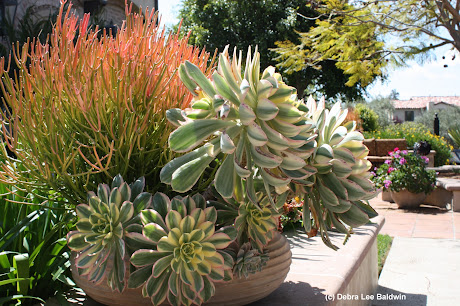
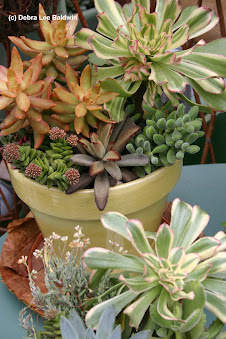
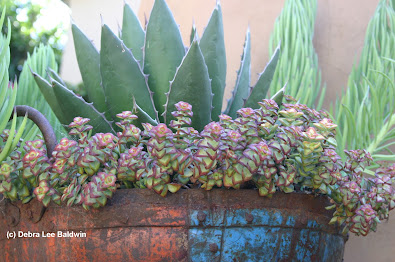
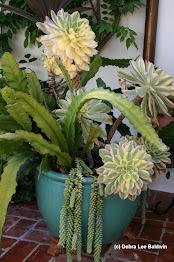
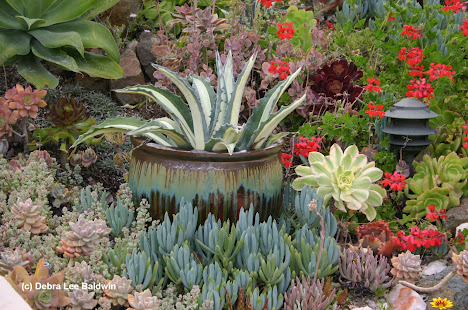
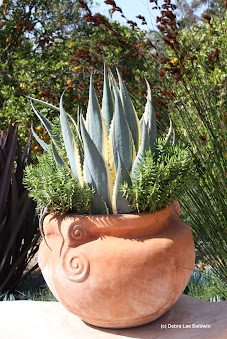
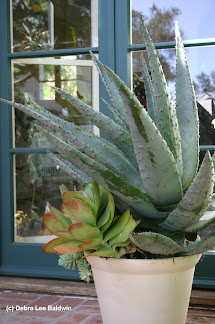
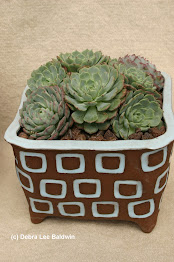
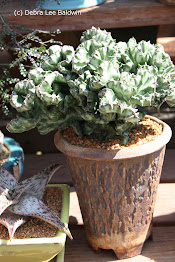
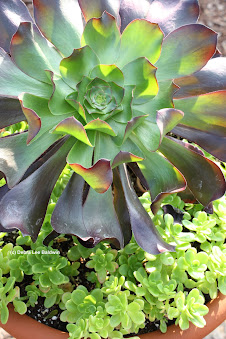
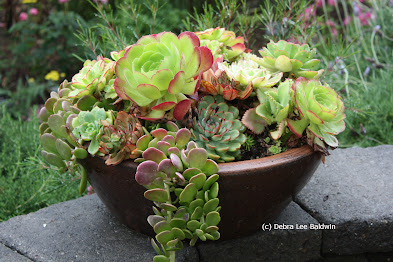
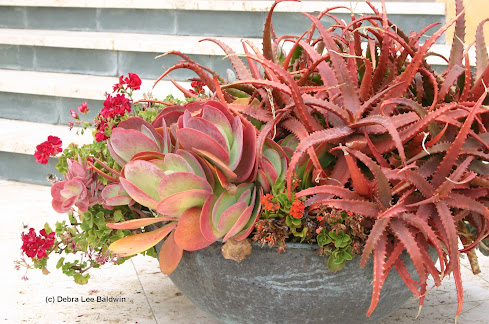
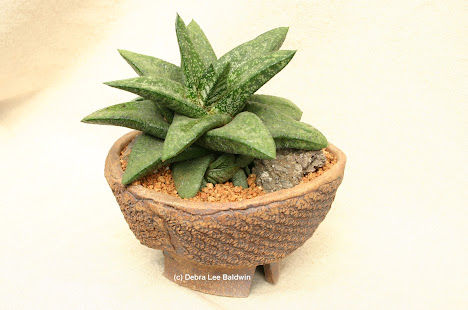
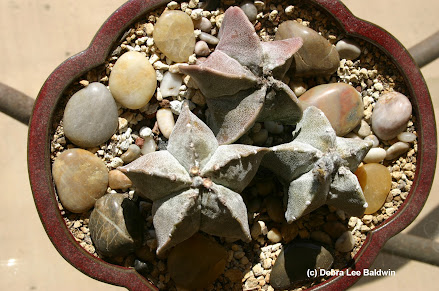
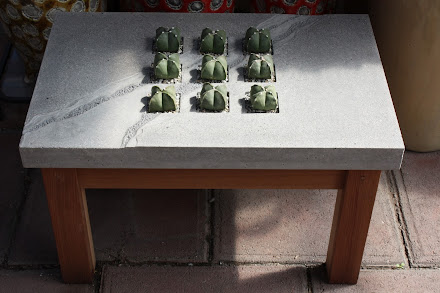 Some incredible photos by Debra Lee Baldwin. They are inspiring me to go and plant some containers this weekend. I will share often as I begin mixing and working on container arrangements with succulents. Debra is a great inspiration with her photos and designing with succulents books, as well as her new one coming out this spring which I am sure to get.


